

When choosing a security camera for your home or business, one of the most common questions customers ask is:
“What’s the difference between night vision and full-color night vision cameras?”
If you’re investing in a home security system, understanding how each technology works will help you choose the right system for your property.
What Is a Traditional Night Vision Camera?
Traditional night vision cameras use infrared (IR) light to see in complete darkness.
These cameras have built-in infrared LEDs that emit light invisible to the human eye. When it gets dark, the camera switches to infrared mode and produces black-and-white footage.
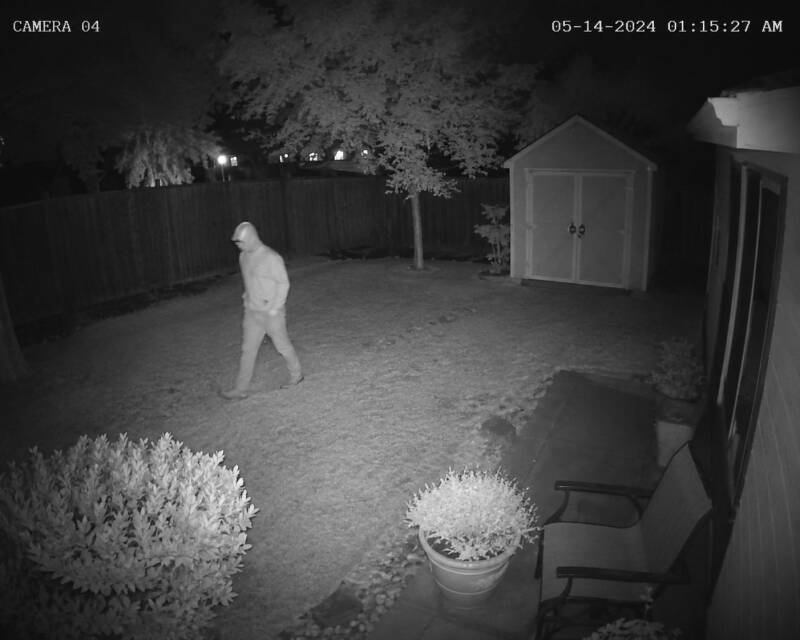
How It Works:
- IR LEDs activate in low light
- Camera sensor detects infrared reflection
- Image switches to monochrome (black & white)
- Can see in total darkness (0 lux environments)
Pros of Infrared Night Vision Cameras
- Works in complete darkness
- No visible light needed
- More discreet (no bright spotlight)
- Generally more affordable
- Long IR range (often 50–150 feet)
Cons of Infrared Night Vision
- Only black-and-white footage at night
- Less detail for identifying clothing colors or vehicle colors
- IR reflection can cause glare (especially on license plates or glass)
- Depth perception is sometimes reduced.
What Is Full-Color Night Vision (ColorVu / Color at Night)?
Full-color night vision cameras use high-sensitivity image sensors combined with built-in white light (spotlights) to capture color images in low-light conditions.
Instead of switching to black and white, the camera keeps recording in full color — even at night.
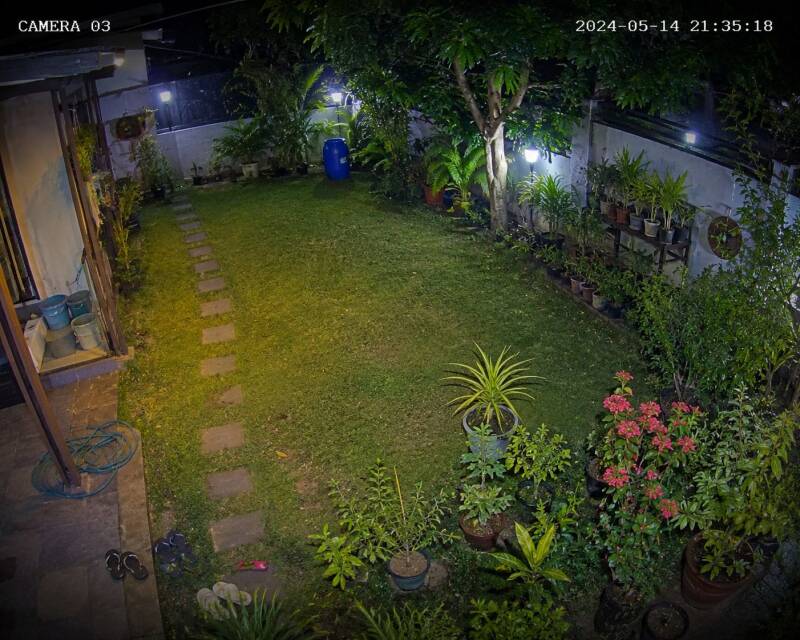
How It Works:
- Uses larger aperture lenses (often F1.0–F1.2)
- High-sensitivity CMOS sensors capture more light
- Built-in white LED spotlight activates in low light
- Produces bright, full-color footage
Pros of Full-Color Night Vision Cameras
- Captures clothing color, car color, and facial details
- Better evidence for law enforcement
- Improved identification accuracy
- Acts as a visible deterrent (spotlight turns on)
- Sharper nighttime image quality
Cons of Full-Color Night Vision
- Requires some ambient light (or spotlight activation)
- Spotlight is visible (less discreet)
- Slightly higher cost
- Shorter range compared to IR-only in complete darkness
Side-by-Side Comparison
Feature: Infrared Night Vision
Image Type: Black & White
Works in Total Darkness: Yes
Detail Recognition: Moderate
Cost: Lower
Best For: Large Dark Areas
Feature: Full-Color Night Vision
Image Type: Full Color
Works in Total Darkness: With Spotlight
Detail Recognition: High
Cost: Slightly Higher
Best For: Entry points & driveways
Which One Do I Recommend?
In my professional opinion, I typically recommend:
Full-Color Night Vision for:
- Front doors
- Driveways
- Storefronts
- Parking lots
- Anywhere identification matters
Because when something happens, color matters. Knowing someone wore a “dark hoodie” is different from knowing they wore a “red jacket.” Seeing a “sedan” is different from seeing a “blue Honda Accord.” Full-color cameras provide better usable evidence.
Infrared Cameras for:
- Large backyards
- Perimeter fencing
- Warehouses
- Areas with zero light
Infrared still performs very well in total darkness and is budget-friendly for covering wide areas.
The Best Setup? A Hybrid System.
For most home security systems, I recommend combining both:
- Full-color cameras at key entry points
- Infrared cameras for perimeter coverage
That gives you full coverage while keeping installation costs reasonable.
Why Professional Installation Matters
Proper security camera installation isn’t just about mounting a device.
It involves:
- Correct angle placement
- Network configuration
- Proper NVR setup
- Bandwidth management
- Secure remote viewing
- Structured cabling and low-voltage wiring
A professional CCTV installer ensures your system records clearly, reliably, and securely.