

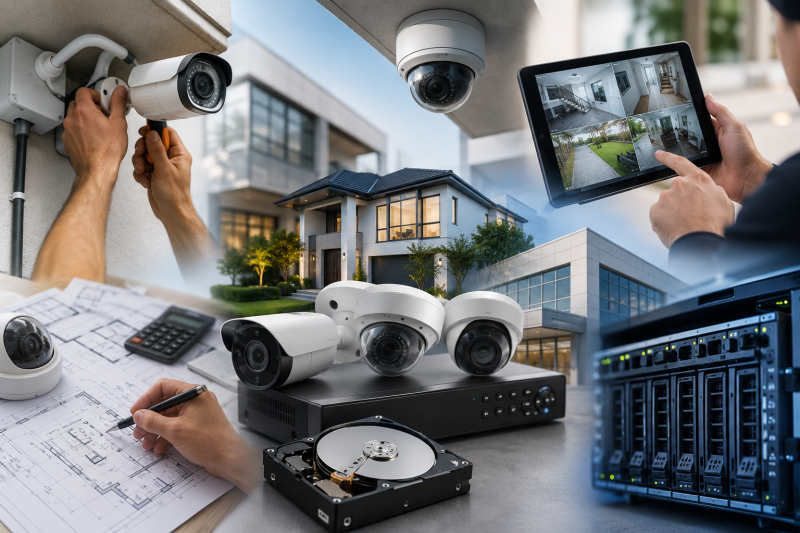
When people begin researching a new security camera system, one of the first questions they ask is:
“How much does a security camera installation cost?”
The answer is not always straightforward — and honestly, it Can't be.
Every property is different, and a proper CCTV installation is literally based on the actual needs of the location rather than a one-size-fits-all price list. The number of cameras matters, but so does the structure of the building, cable routing, camera placement, and the overall complexity of the installation.
Why Security Camera Installation Pricing Varies?
A professional security camera installation involves much more than simply mounting cameras onto walls.
Before pricing a system, installers typically evaluate several important factors, including:
- The size of the property
- The layout of the home or business
- Indoor vs. outdoor camera placement
- Cable routing options
- Network setup
- Lighting conditions
- Entry points and vulnerable areas
- Recording equipment placement
- The overall appearance and cleanliness of the installation
For example, installing cameras in a small single-family home may require significantly less labor and material than installing a system in a multi-story commercial building.
Some homes allow cables to be hidden inside walls or ceilings easily, while others may require conduit, protective coverings, or additional materials to keep the installation looking clean and professional.
Why On-Site Evaluations Matter...
Many customers ask for pricing over the phone based only on the number of cameras they want installed. While this can provide a rough estimate, it usually does not tell the full story.
An on-site evaluation helps determine:
- What materials will actually be needed
- Whether cables can be concealed
- If conduit or cable covers are necessary
- The safest and most effective camera locations
- Potential blind spots
- Power and network accessibility
- Weather exposure for outdoor cameras
This step is important because two homes asking for “four cameras” may require completely different amounts of labor and equipment depending on the structure of the property.
Storage Capacity and Playback Time
Another common question people ask during a security camera installation consultation is:
“How much storage will the system have?”
The answer depends on several factors, including:
- The number of cameras
- Recording quality and resolution
- Motion recording vs. continuous recording
- How many days of playback the customer wants to store
Security camera systems use hard drives measured in terabytes (TB) to store recorded footage. The more cameras a system has, the more storage space is typically required.
For example, a smaller residential CCTV installation with only a few cameras may require less storage, while a larger home or commercial property with multiple high-resolution cameras may need significantly more memory to retain longer playback history.
Some customers may only want a few weeks of playback, while others prefer several months of recorded footage available at all times.
This is another reason why an on-site evaluation is important. Once the property is surveyed and the number of cameras is determined, installers can recommend the appropriate amount of storage required for both system performance and playback.
A properly planned CCTV installation should balance camera coverage, video quality, and storage capacity to ensure the system operates efficiently without running out of recording space.
A professional CCTV installation should be tailored specifically to the location rather than treated like a generic package.
Camera Placement Is Just as Important as the Cameras Themselves!
One of the biggest misconceptions about security camera systems is that more cameras automatically mean better security.
In reality, proper camera angles and positioning are often more important than simply adding additional devices.
Homeowners and business owners may already have certain areas in mind they want covered, but experienced installers can often recommend better viewing angles, identify overlooked blind spots, or even eliminate unnecessary camera placements altogether.
Strategic placement helps maximize coverage while keeping the system efficient and practical.
Clean Installation Matters
A properly installed security camera system should not only function well — it should also look professional.
Visible hanging wires, exposed cables, and poorly routed installations can affect both appearance and reliability over time.
Depending on the property, installers may use:
- Cable concealment methods
- Conduit protection
- Wall routing
- Cable covers
- Weatherproof materials for outdoor systems
The goal is to create a system that blends into the property while remaining secure, organized, and reliable.
Residential vs. Commercial CCTV Installation
Pricing can also vary depending on whether the system is being installed in a home or a business.
Commercial CCTV installation projects often require:
- More cameras
- Larger recording systems
- Longer cable runs
- Multi-building coverage
- Higher storage capacity
- Advanced network configurations
- Remote access for multiple users
Residential systems are usually smaller in scale, but homeowners still benefit from careful planning and strategic camera placement.
Choosing the Right Security Camera System
When planning a security camera installation, it helps to focus less on finding the “cheapest” setup and more on creating a system that fits the property correctly.
A properly planned CCTV installation can help:
- Monitor entry points
- Reduce blind spots
- Improve visibility around the property
- Provide recorded footage when needed
- Allow remote viewing from phones, tablets, and computers
- Increase overall peace of mind
Every building has different security needs, which is why custom planning and professional evaluation play such an important role in the process.
Final Thoughts :
Security camera installation pricing is rarely based on just the number of cameras alone. The structure of the property, cable management, camera placement, materials, and overall installation requirements all contribute to the final setup.
A well-designed CCTV installation focuses on reliability, clean workmanship, proper coverage, and long-term functionality — not just equipment alone.
By understanding what goes into the installation process, property owners can make more informed decisions when planning a security camera system for their home or business.
Add comment
Comments